The 4-Bucket Retirement Strategy Explained
Worried about running out of money in retirement? Discover the 4-bucket retirement strategy that protects your portfolio from sequence of returns risk while letting you spend with confidence.
Yannick
6/29/20264 min read
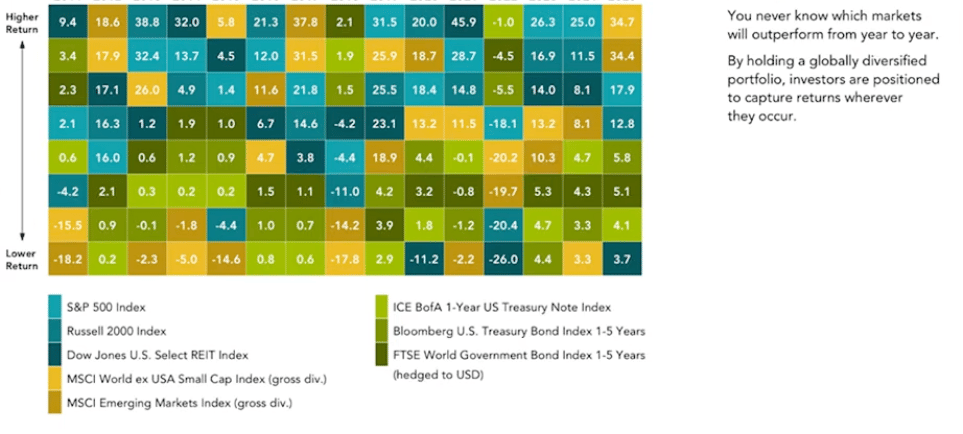
The 4-Bucket Strategy
You worked hard. You saved methodically. And today, your net worth sits somewhere between 1 and 10 million euros. On paper, you're financially free.
So why are you still working?
For many savers in this position, the real obstacle isn't financial — it's psychological. Fear of running out. Fear of watching your capital evaporate. Fear of what specialists call sequence of returns risk.
This article is for you. Because the data is clear: in the vast majority of historical scenarios, well-prepared retirees don't end up broke. They end up with far more wealth than they expected. You just need the right plan.
The Trap of Averages: Why Your Intuition Is Misleading You
During your accumulation years, average returns were your best friend. A portfolio generating 7% annually over 30 years is a winning formula.
But once you retire, the rules of the game change completely.
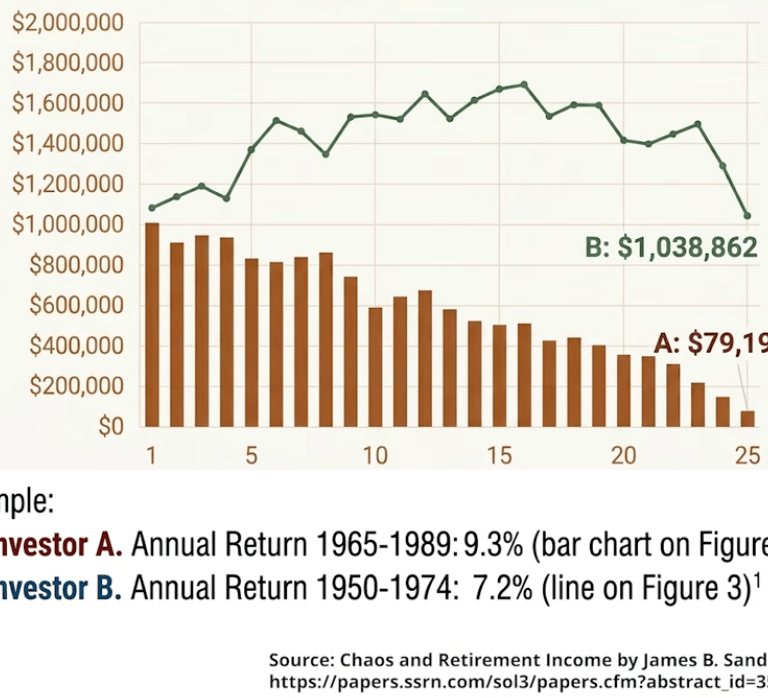
What matters now isn't the average of your returns — it's the order in which they arrive.
Here's why:
📉 Unfavorable scenario: The market crashes right at the start of your retirement. You're forced to sell portfolio shares at rock-bottom prices just to cover your everyday expenses. This creates permanent, nearly irreversible damage to your capital.
📈 Favorable scenario: The good years come first. Your portfolio grows large enough that your future withdrawals represent only a tiny fraction of the total.
Same starting capital. Same average return. Wildly different outcomes.
"Averages are for saving. Sequences are for spending."
This distinction is fundamental. And not understanding it can cost you dearly — in both directions.
The Ghost of 1966: Stop Planning for History's Worst-Case Scenario
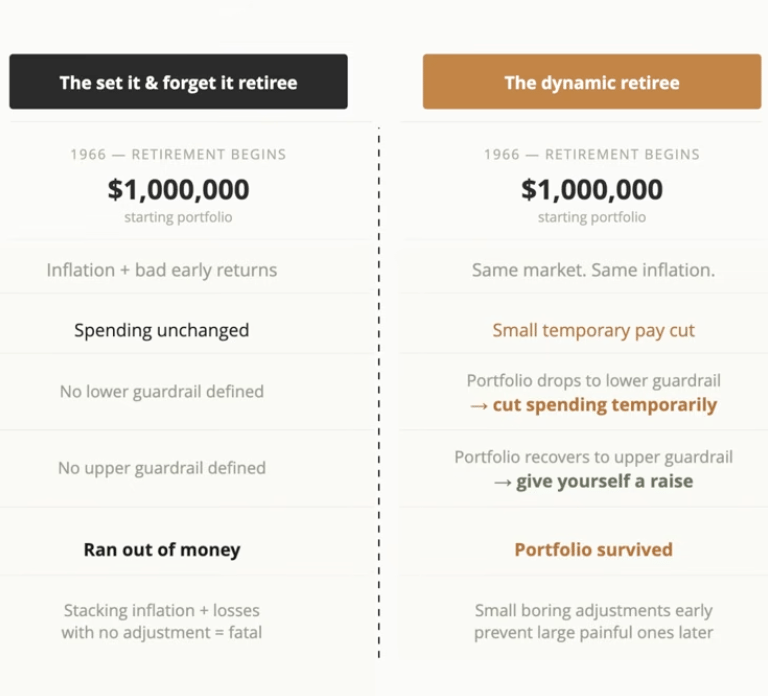
The famous 4% rule was born out of a historical nightmare: the year 1966. High inflation, stagnant stock returns, eroding purchasing power. The worst possible starting point for a retirement in modern financial history.
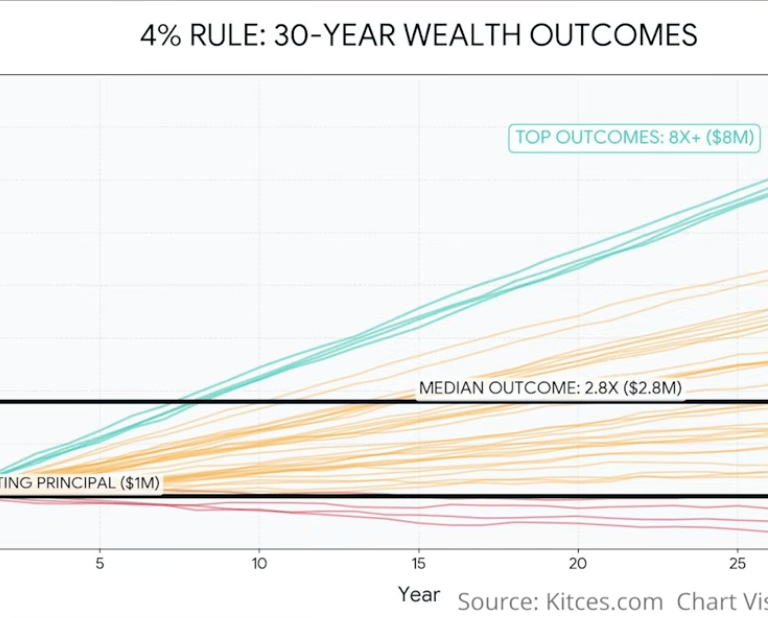
The rule states that a retiree can withdraw 4% of their capital each year without ever depleting it over 30 years — even under the worst historical conditions.
It's a useful rule. But treating history's worst-case scenario as your baseline scenario is a costly mistake.
The numbers tell a very different story:
Worst historical case (1966) = capital reaches zero after 30 years of retirement
Median case = 2.8x your starting capital after 30 years of retirement
Best case = 5 to 8x your starting capital after 30 years of retirement
In other words: the most likely outcome isn't ending up broke — it's ending up far wealthier than on day one of your retirement, all while living a completely normal life.
Thousands of savers needlessly impose a life of austerity on themselves out of fear of a scenario that, statistically, will almost certainly never happen. That's the real waste.
The 4-Bucket Strategy: Organizing Your Capital for Every Storm
The solution to sequence risk isn't to be more cautious. It's to be better organized.
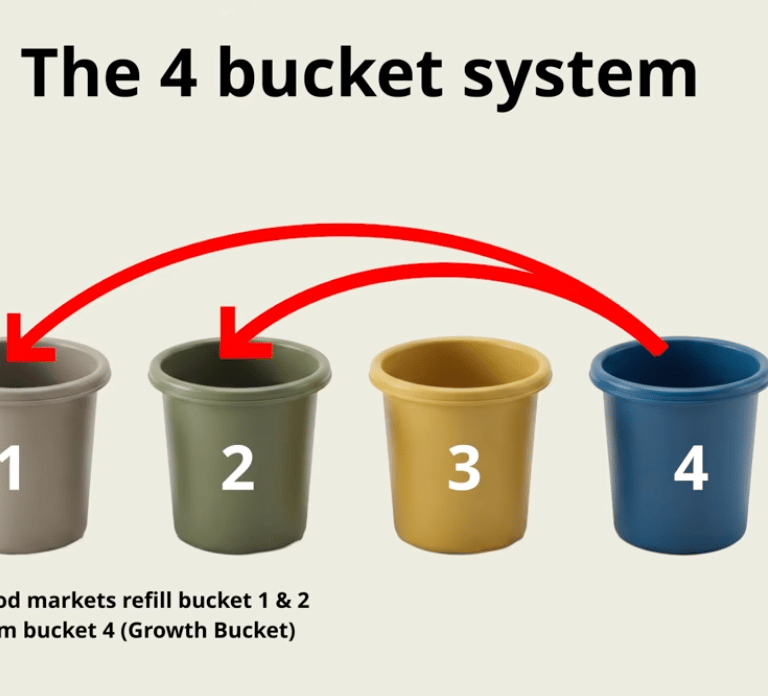
The bucket strategy lets you capture long-term market growth while protecting yourself from short-term shocks. Here's how to build it:
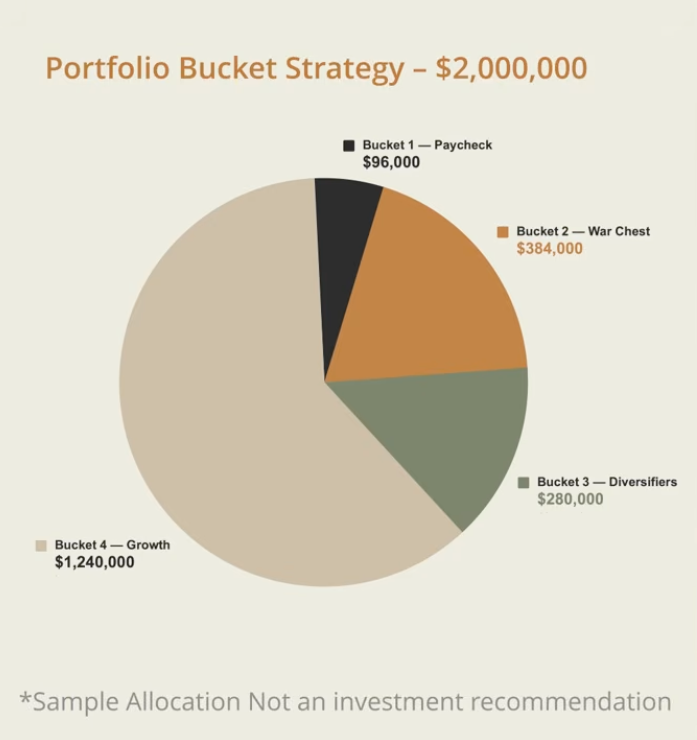
🪣 Bucket #1 — The "Paycheck" — Horizon: 0 to 12 months
Term deposits, money market funds, available cash
This is your retirement checking account. It holds 6 to 12 months of expenses and funds your daily life — rent, groceries, bills, monthly pleasures.
Its role: to give you immediate emotional stability. You know your next several months are covered, no matter what happens in the markets.
🪣 Bucket #2 — The "War Chest" — Horizon: 2 to 5 years
High-quality corporate bonds, short-term bond funds
This is your strategic safety net. It holds 2 to 5 years of expenses invested in low-volatility assets.
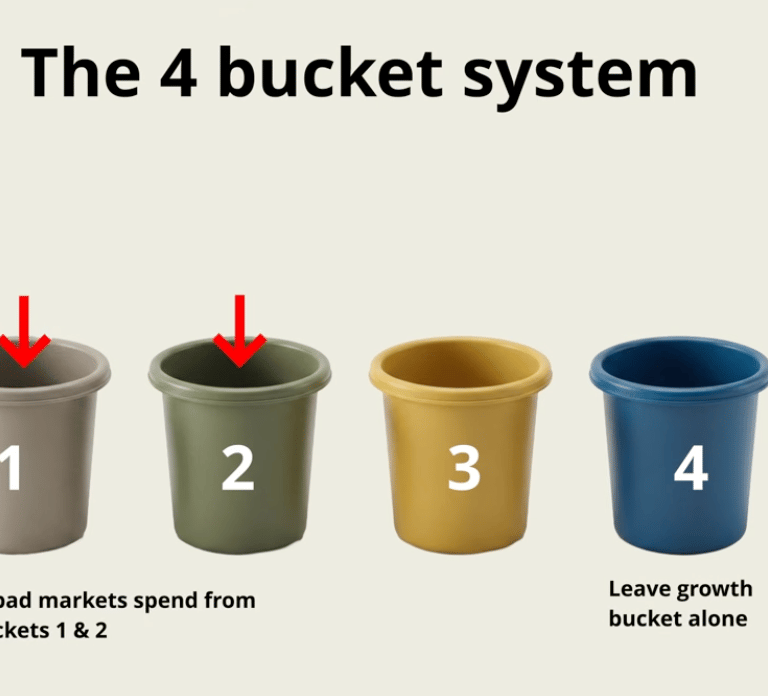
Its crucial role: preventing forced selling during a market crash. If equity markets collapse for 18 months, you draw from this bucket — not from your stocks. You're never forced to sell at the worst possible moment.
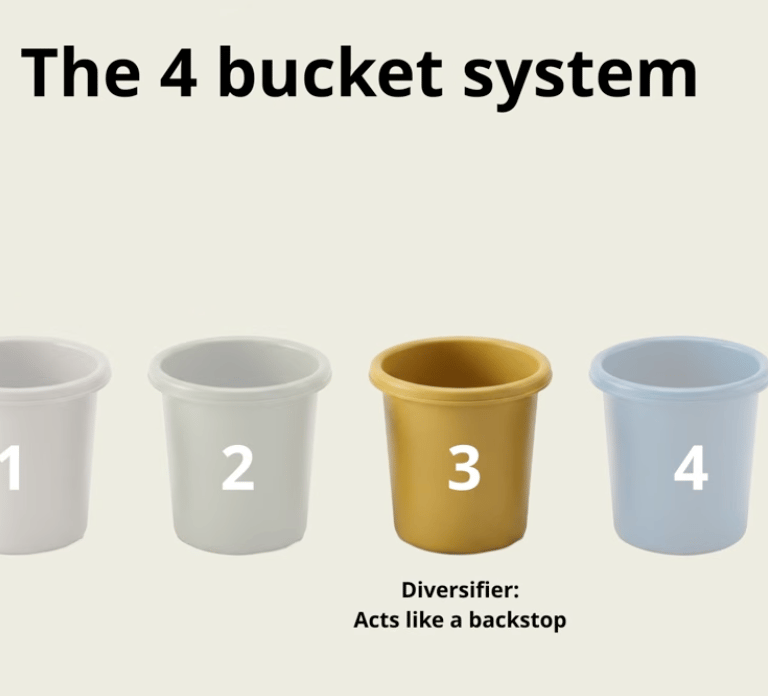
🪣 Bucket #3 — The "Diversifiers" — Allocation: 14 to 20% of total portfolio
Real estate (REITs, French SCPIs), commodities, inflation-linked government bonds
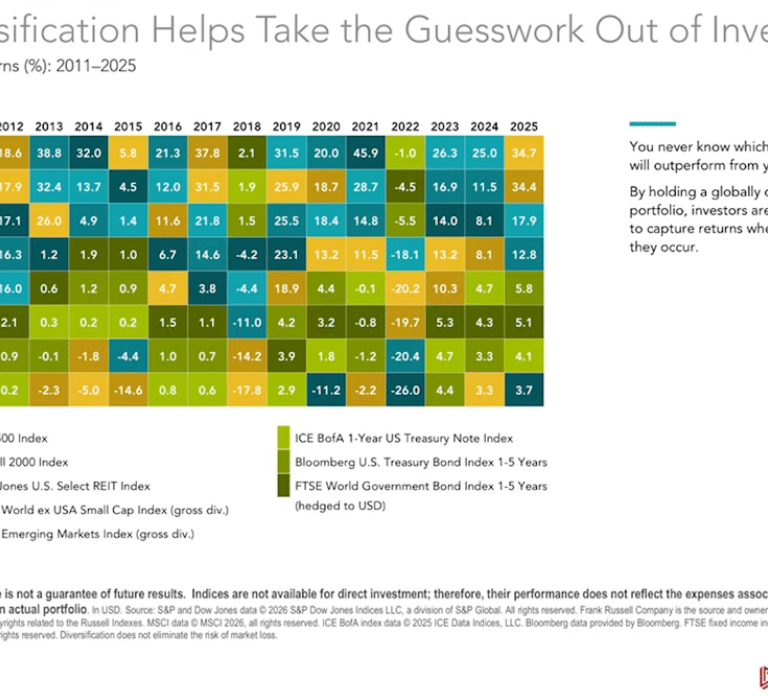
This bucket holds assets with low correlation to equity markets. When stocks fall, these assets tend to hold up better — or even gain.
Its role: cushioning shocks and smoothing out your portfolio's overall volatility.
🪣 Bucket #4 — The "Growth Engine" — Horizon: 10+ years
Global equities (US, international, and emerging markets)
This is the long-term engine of your retirement. This bucket isn't touched during crises — it has time to recover and grow.
Its role: beating inflation over multiple decades and gradually replenishing the other buckets over the years.
The Guardrails: Taking Back Psychological Control of Your Spending
The buckets solve the technical problem of forced selling. But there's still a very real human challenge: how do you manage your spending in the face of market uncertainty?
The answer: abandon the fixed withdrawal rate. Adopt dynamic spending management with guardrails.
The principle is simple:
📉 If markets fall and your withdrawal rate hits a predefined lower threshold → you temporarily cut non-essential spending by 5 to 10% (postponed trips, smaller gifts, fewer outings).
📈 If markets rise and your withdrawal rate hits an upper threshold → you give yourself a well-deserved budget increase.
This flexibility, even modest, changes everything. In most scenarios, it allows you to spend more than the classic 4% rule over the course of your entire retirement — while still preserving your capital.
The key? Agree to these rules in advance, in writing, before emotions cloud your judgment.
Conclusion: Confidence Comes From a Written Plan, Not a Favorable Market
Sequence of returns risk can't be avoided. It can only be managed.
With the 4-bucket strategy, you never sell your stocks at the bottom. With guardrails, you adjust your spending intelligently instead of panicking. And with a written plan, you know exactly what to do — whether markets rise, fall, or go nowhere.
The result? You can retire earlier. Spend more confidently. And stop living in the shadow of the 1966 worst-case scenario — a scenario that, statistically, probably doesn't apply to you.
Financial freedom isn't just about the numbers. It's about confidence. And confidence comes from having a solid plan.
Photos